Wedges are all over the golf news these days, what with all the reporting about the new groove rules. And there's always lots of dialog . . .and confusion . . . about the various pros and cons of high-bounce, low bounce, tour bounce, etc.
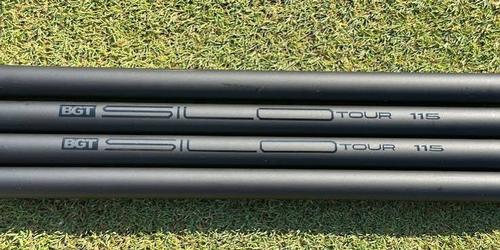
But in my observation, there is that "elephant in the room" when it comes to wedges - none of the major brands talk about shafts and/or fitting. Nearly every make and model in the shops and stores features the same stiff old steel shaft, available in one flex, which doesn't really fit anyone that well.
I've been a lifelong Ben Hogan "disciple", and one of my favorites of his many wise observations was his view that "a golf club is 90% shaft and 10% how it goes through the dirt."
In my opinion, that balance shifts somewhat with wedges, but there's no question that the wedge shaft is extremely important. Think for a moment of what you ask your wedges to do.
They have to perform at full swing speeds, able to stabilize the heaviest clubheads in the set, and still give you tight boring trajectories. But most of the time, they are used in half swings, 3/4 swings, and varying clubhead speeds all the way down to near putter speed. No matter what the shot at hand, your wedges have to deliver the ultimate blend of performance and feel.
Our research into wedge shafts at EIDOLON revealed two very important "new truths" about wedges shafts:
1. If you build a golfer a set of wedges with shafts that are more closely matched in weight and material to the shafts in their irons, their short game touch improves dramatically, and
2. If you build those wedges on a shaft flex that is slightly softer than that in their irons, the improvement takes another step forward.
And to get even further away from "conventional wisdom", we asked:
"Why should a wedge shaft be made of steel anyway?"
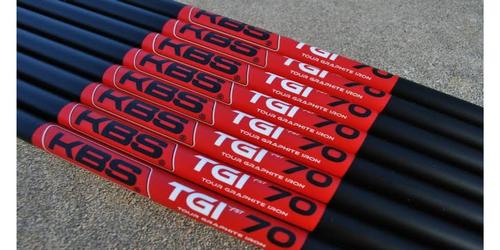
There's no question that carbon fiber (graphite) has far superior feel transmission properties over tubular steel. If you are a fisherman, you know that the finest fishing rods are all made of carbon fiber for that very reason.
With carbon fiber, the engineers have almost infinite control over the balance point, flex characteristics and other technical stuff that affects golf shot performance. And finally, we can make high quality carbon fiber shafts in nearly any weight we want, so that we can ensure a proper match to any golfer's skills and abilities. [NOTE: At EIDOLON, our SCoR graphite shafts have been so well received that nearly 40% of the wedges we build now are in graphite!]
Regardless of whether your preference is for steel or graphite, if you really want to improve your (or your golfers') wedge play this season, take a close look at the tools you/they rely upon for scoring. And give consideration to having them rebuilt to more accurately fit you, or totally replace them with some that can optimize your short game performance.
You've got nothing to lose but strokes off your scores.