.jpg)

Some golf trips are built around one great course. This one was built around variety, and Gaston County, North Carolina delivered it in a way I didn't fully expect. Over a few days, I played a laid-back nine-hole track where tee times aren't required, a historic Donald Ross design quietly grinding out good golf since the 1930s, and a private mountain club with a restoration story dramatic enough to make you forget you're just there to play golf. Three completely different personalities, all a short drive apart in the shadow of Charlotte.
We set up base camp at the Hampton Inn on Remount Road, which turned out to be an ideal home base for reasons beyond just the golf. Texas Roadhouse sits right next door, which made for an easy first night when we didn't feel like venturing far after the drive in. It's hard to beat the value and taste of a Texas Roadhouse steak! The next night we branched out to Webb Custom Kitchen, a popular upscale restaurant located inside a restored 1920s movie theater in Gastonia, North Carolina. It serves fresh American classics like steaks and seafood, and the service is tremendous, especially if Dublin is your server! Our last dinner was at The Smoke Pit, on Cox Road in Gastonia, North Carolina, a popular, casual counter-service barbecue joint. It is known for huge portions of hickory-smoked, Texas-style brisket, pulled pork, burnt ends, and ribs, served alongside an array of house-made regional barbecue sauces and comforting classic sides.
We started at Cherryville Country Club, a nine-hole facility where you don't need a tee time. You show up, pay your greens fee, and go tee off, refreshingly simple in an era when golf has become a scheduling exercise. Men play White on the front and Blue on the back; women play Yellow and Burgundy. The men's combination plays 5,511 yards at a 67.4 rating and 128 slope, plenty of teeth to keep me honest without needing the numbers to prove it.
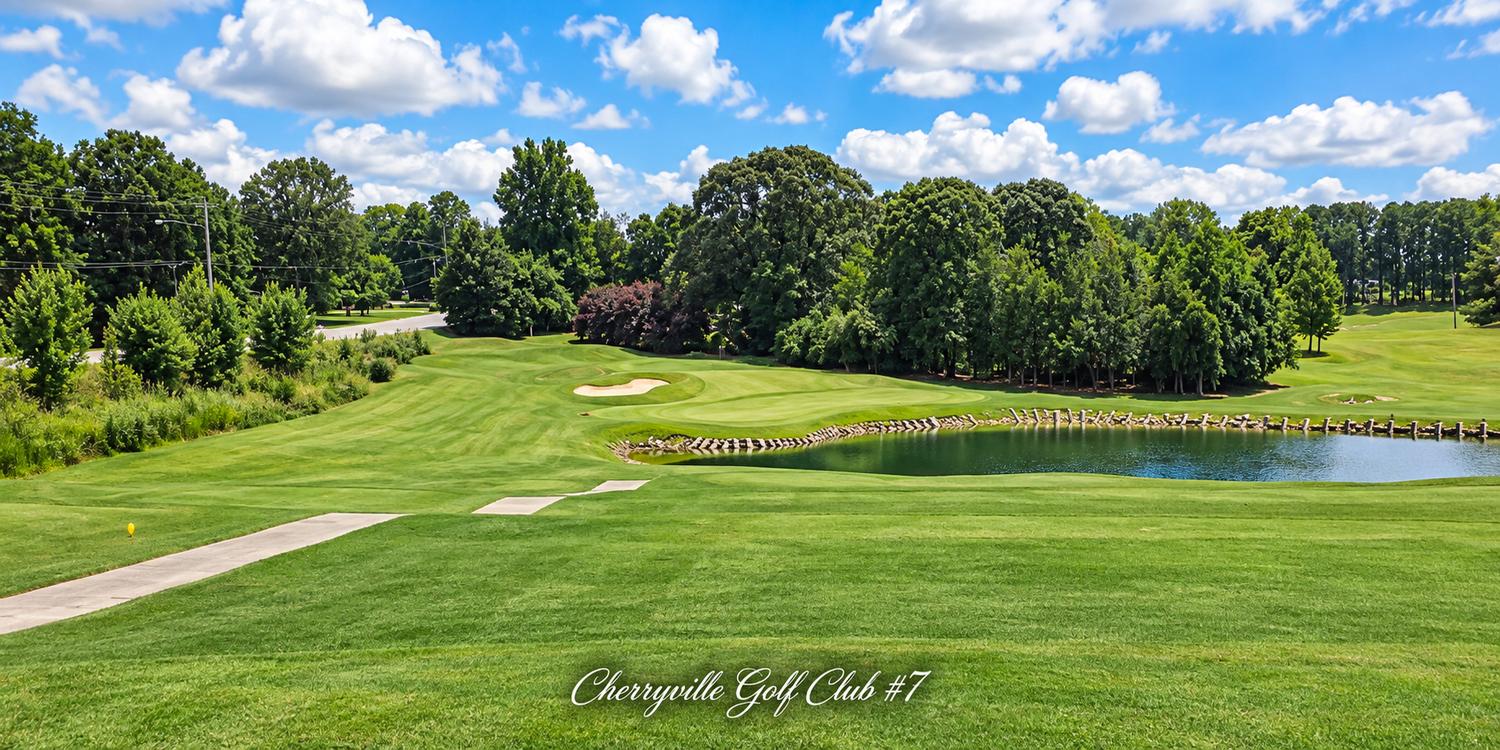
Cherryville's third is a short par 4 that still makes you think, just 294 yards and a dogleg left, but the smart play is landing your tee shot around the 150-yard marker, since anything past rolls down a hill into the woods, never to be seen again. Carry the trees on the left, and the hole shortens considerably, rewarding the aggressive line into a small, well-undulated green guarded by a bunker crossing the front. The signature hole is number 7, a downhill par 3 with water guarding the front and a kidney-shaped green backed by a large, deep bunker long and left. Greens are small throughout, putting a premium on accuracy, especially on the par 5, 8th hole, where the approach plays downhill into a green tucked behind a little lake. It adds up to a relaxed, no-frills facility with a loose dress code and a course full of people simply there to have fun. After your round, stop by The Fuzzy Cow, a family-owned frozen yogurt and treat shop at 204 E. Main Street in Cherryville, North Carolina. Opened in 2023, it offers self-serve frozen yogurt, over-the-top milkshakes, bubble tea, and games in a fun, cow-themed farmhouse setting.
The next day, I headed to Catawba Creek Golf Course, formerly Gastonia Municipal, a par-70, 18-hole layout with three sets of tees, a driving range, and a practice putting green. Legend holds the original layout was the work of Donald Ross, later updated by Rich Mandell, with the course opening in 1935. Playing 6,172 yards at a 69.5 rating and 130 slope, Catawba Creek rolls through fairways with modest elevation changes that set up a handful of blind shots, something you'll feel firsthand on the third tee.
Catawba Creek carries only two par 5s, but the par 3s are the real stars: four of them, playing 200, 210, 182, and 169 yards, with back-to-back par 3s at 16 and 17 a novel touch you don't see often. The 17th is the standout, 169 yards from the back tees up to a green perched atop a hill. Miss it off the tee, and you're staring down a genuinely tough up-and-down, one of the more nerve-wracking moments of my trip.
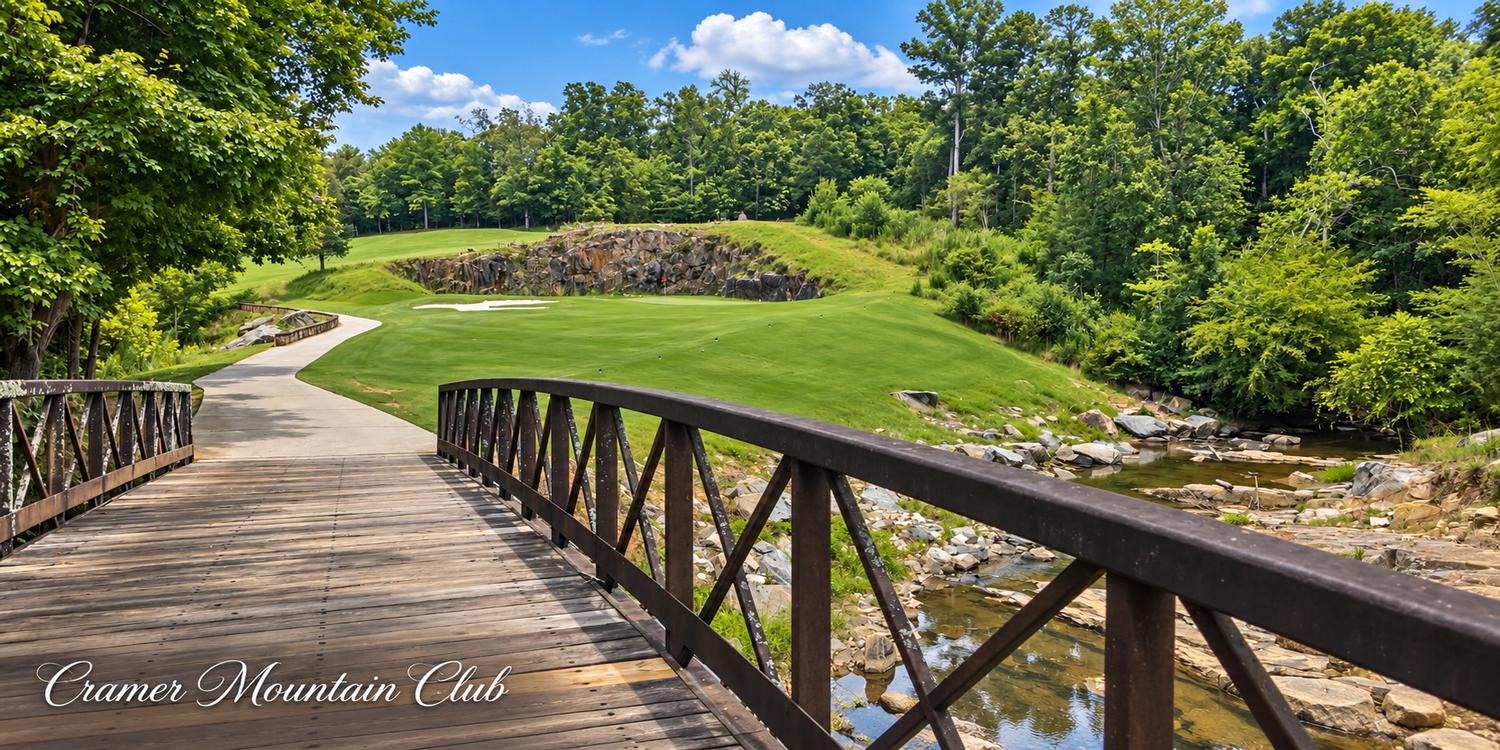
Day three was Cramer Mountain Club, saving the best for last, and it was worth the wait, assuming you can get on. Cramer is a private club, so access can be tricky without a member, but it's worth the effort to try. Dan Maples designed the course, which opened in 1986 on land with a fascinating backstory: the property once belonged to Stuart Cramer, a mill magnate whose summer home on the mountain hosted Presidents Herbert Hoover and Dwight Eisenhower. The original club closed in 2010, and the course sat dormant and overgrown for a couple of years before a group of more than 200 residents partnered with DMD Investments in 2014 to bring it back to life as a member-owned club, with new Bermuda greens, updated irrigation, and a full restoration.
Cramer Mountain offers four marked sets of tees along with two additional hybrid yardages on the scorecard. From the Blue tees, it plays 6,444 yards at a 72.6 rating and 142 slope. I found the White tees at 5,924 yards (69.7/131) to offer a good challenge and still let me leave with a little dignity. The course opens with a genuine gut-check, a 472-yard par 5 dogleg left that keeps bending left the entire way. Miss left, and you're in long, wispy grass that doesn't give golf balls back, so the smart play is working your tee shot and laying up down the right side. Elevation change is constant, and the back nine mixes three par 3s, three par 4s, and three par 5s. The signature 15th, a downhill par 3 backed by a striking natural rock wall, carries its own lore: an ambitious original design had to be reworked when the crew discovered the rock behind the green was too dense to blast through as planned.
If you're plotting a Gaston County golf trip of your own, follow the same order I did: Cherryville first for an easy warm-up, Catawba Creek next for history and sneaky-good par 3s, and Cramer Mountain last- if you can arrange access - the kind of finish that sends you home already planning a return trip. And if Cramer Mountain Club proves out of reach, visit www.gogastonnc.org for more golf options and see everything else the region has to offer.