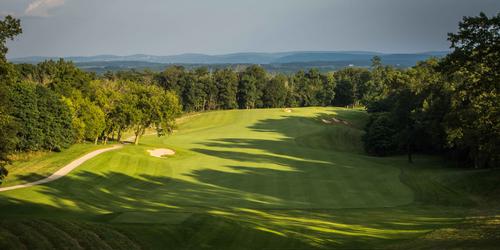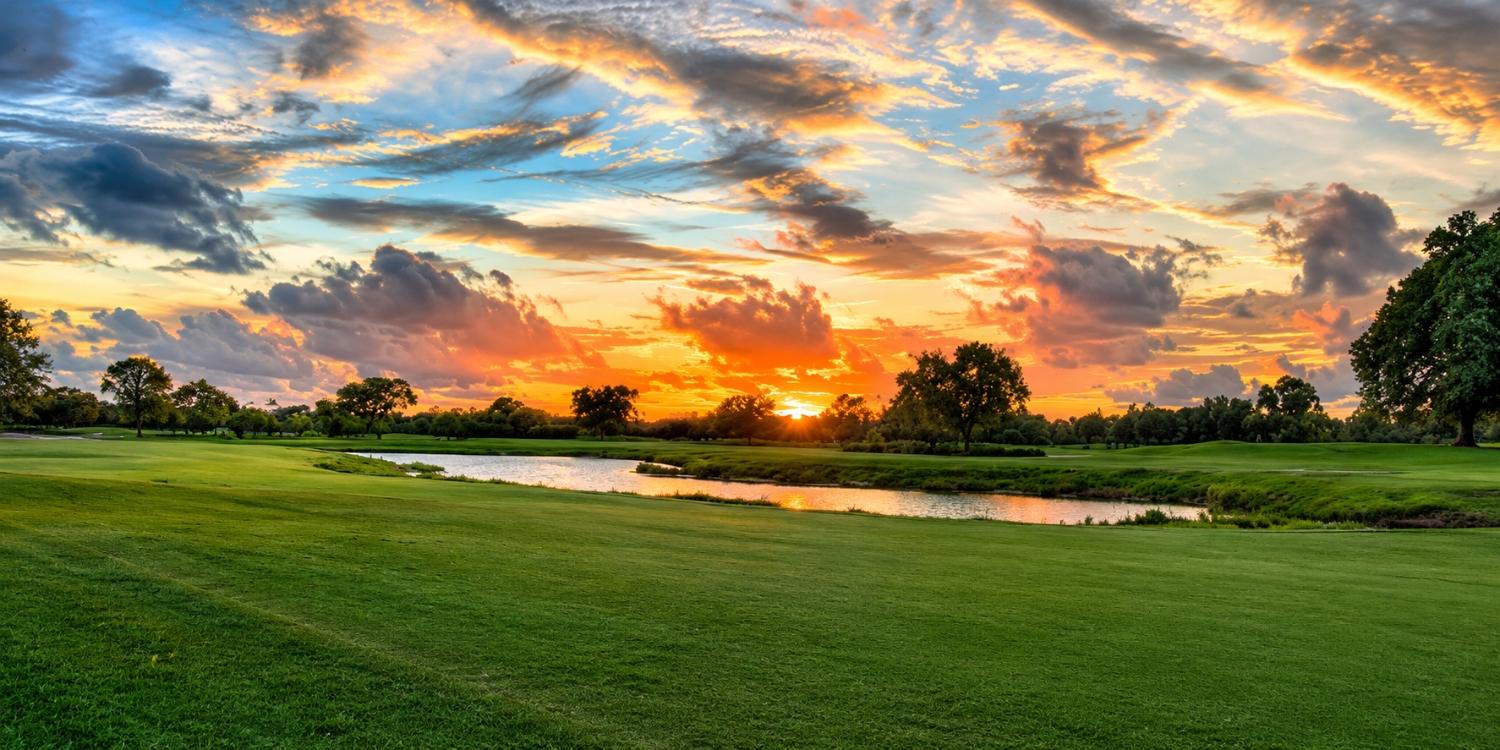
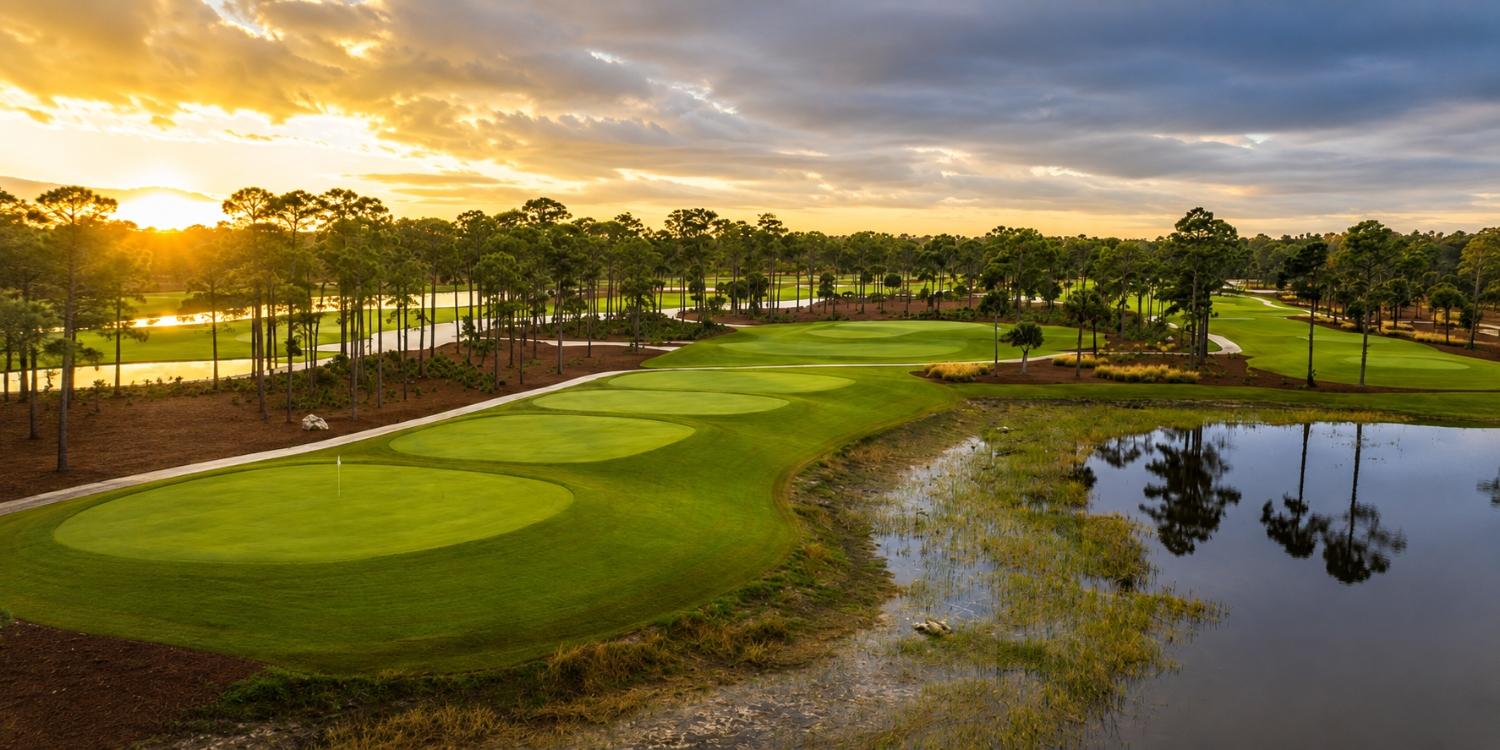
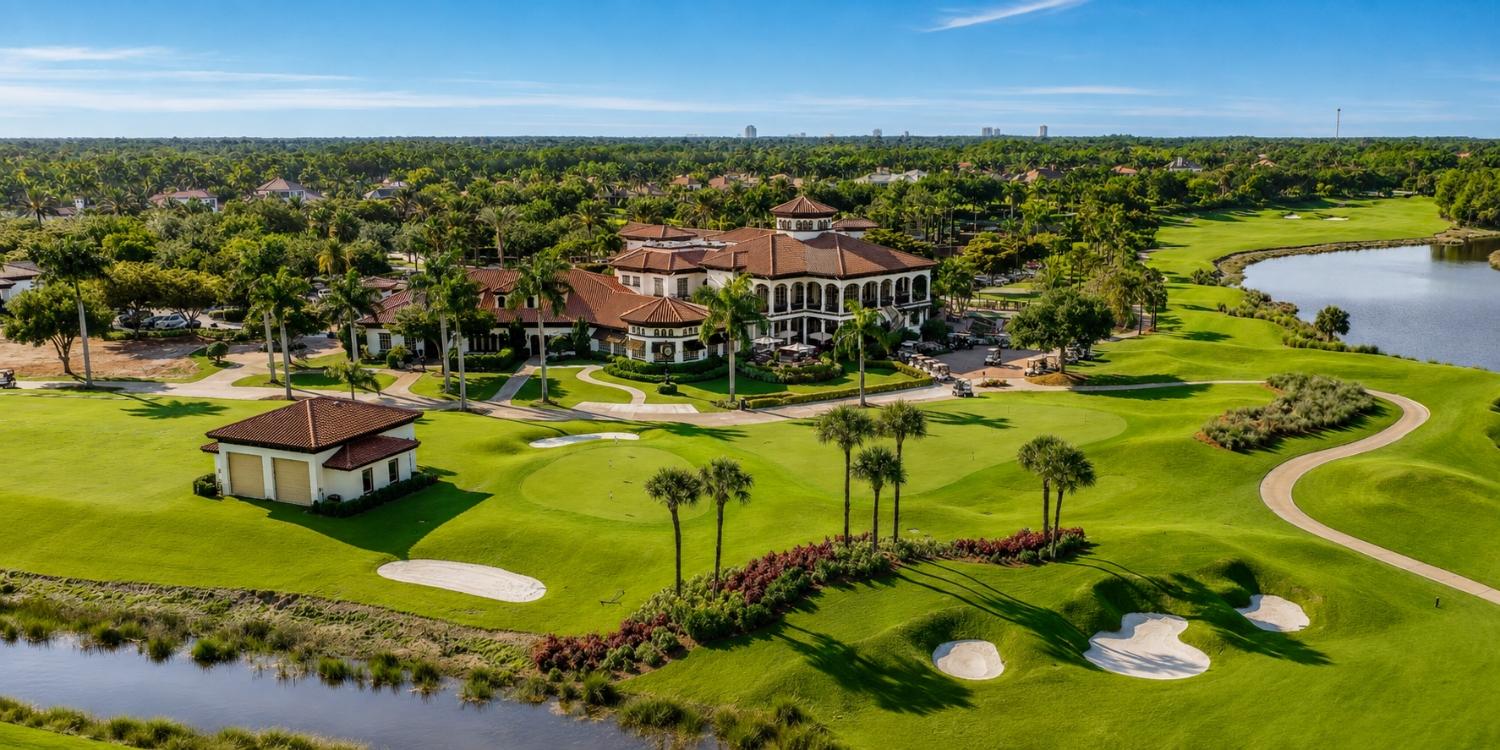
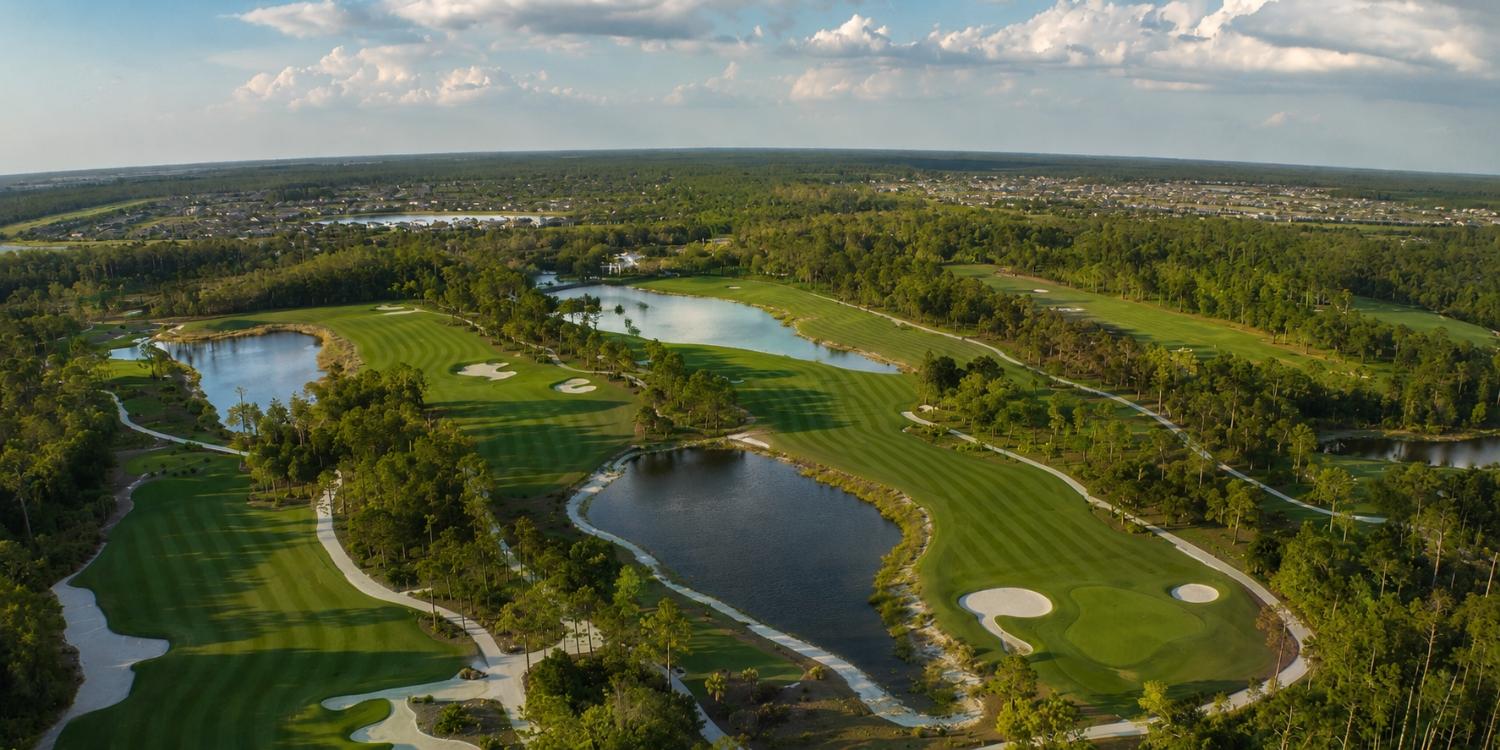
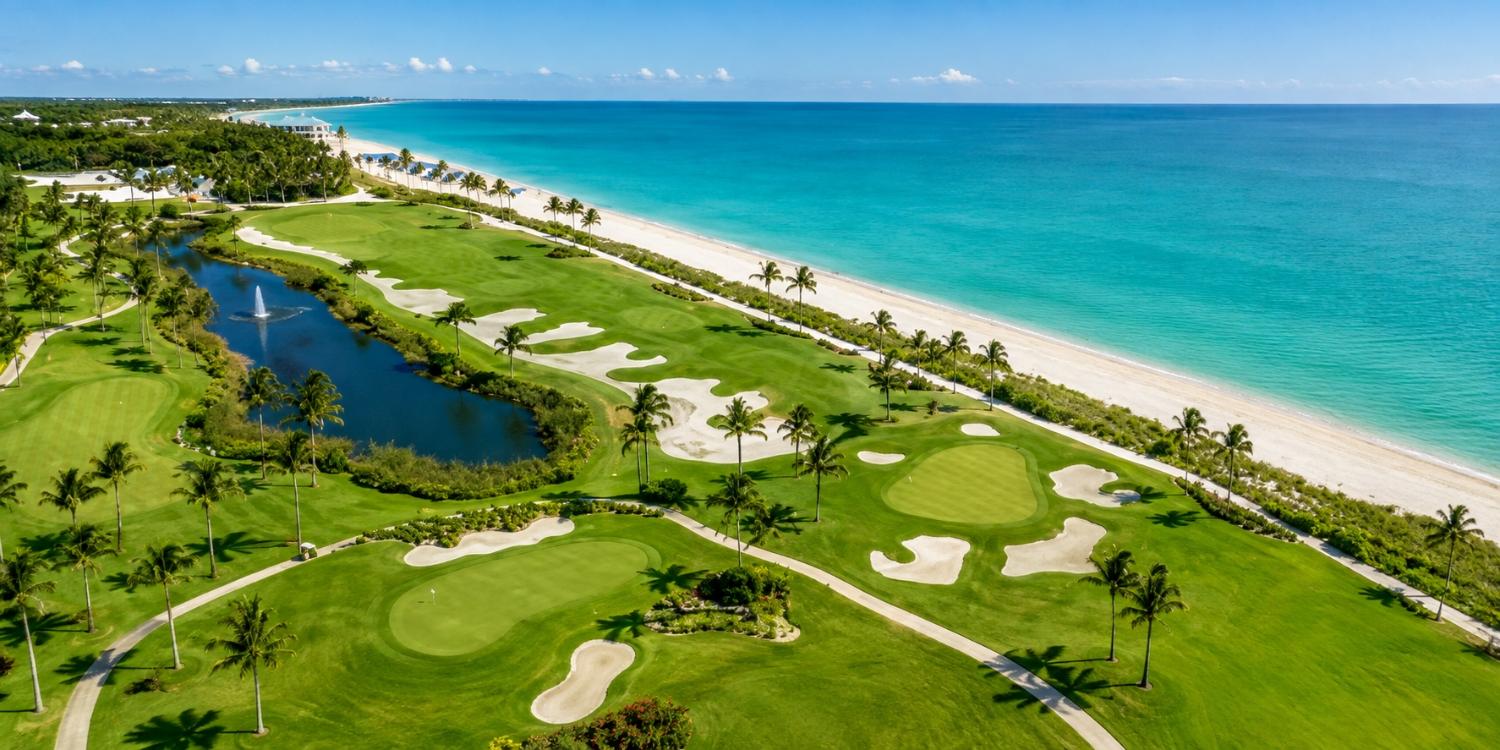

Most people hear Fort Myers and think beach. Snowbirds think warm winters and early bird specials. Spring breakers think... well, let's not go there. But here is what all of them are missing: Lee County -- Fort Myers, Sanibel, Captiva, and Bonita Springs -- is quietly one of the best golf regions in Florida, with a range of courses that can anchor a serious buddy trip or fill out a beach vacation without anyone feeling like they got dragged somewhere they did not want to be.
After Hurricane Ian hammered the area in September 2022, there were real questions about when Southwest Florida would come back. The answer turned out to be: faster than you think. The region is open, the courses are in great shape, and the tourists have returned. If you have been waiting to pull the trigger on a trip, the waiting is over.
Here is your road map to the golf, the beds, the food, and yes -- the seashells, for anyone traveling with a partner who has their priorities straight.
WHERE TO PLAY
Fort Myers Country Club - The One That Surprises Everyone
Do not let the name fool you. This is not a private club for guys in khakis drinking sweet tea on the veranda. Fort Myers Country Club is a municipal golf course, open to the public, and it was built in 1917 by Donald Ross. That alone should get your attention.
The history here is legitimate. The Fort Myers Open was played here in the 1930s, and Horton Smith won it five years before he took the first Masters title. Walter Hagen was the runner-up. These are not minor footnotes -- this is a Ross course with a verifiable pedigree, and you can play it for the price of a decent lunch.
What you get is everything you expect from Ross: small push-up greens, subtle breaks, and a layout that rewards patience and punishes greed. The starter will tell you to play to the front of the greens -- and you should listen. Trouble lives on the sides and the back, and if you come up short, your ball will trickle back off the putting surface in the maddening way only Ross could engineer. The locals have a name for it. They call it getting Rossed. You will understand exactly what that means the first time it happens to you, usually around the third hole.
The par 3s are stout throughout, but the standout is the 12th -- a pool-table-sized elevated green with a forced carry over water in front, marsh on the right, and sand on the left. Miss it anywhere and you are making bogey at best. The finisher is a beefy par 5 at 550 yards with sand, marsh, a water canal, and one of those tiny Ross greens perched up waiting to reject anything that is not perfectly dialed. From the tee you can see the clubhouse. It will feel like a mile. The smart play off the tee is to hug the right side near the sand traps -- it shortens the carry over the canal on your second and gives you the best angle in. Good players will birdie this hole. Bad planners will make double and blame the architect, which is only partially fair.
Architect buffs and history nerds will absolutely want to play this one. Everyone else will find themselves charmed by it whether they expected to be or not.
Salt Leaf Golf Preserve - Florida Golf Without the Florida Headache
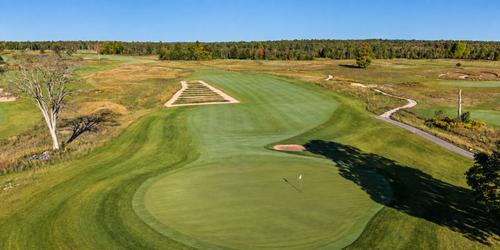
Formerly known as Raptor Bay, this course went through a recent renovation and came out the other side as one of the better public-access options in the area. The name Salt Leaf Golf Preserve fits now, because holes 11 through 17 play through a natural preserve that feels genuinely removed from the surrounding development. No houses dotting every fairway, no screened-in lanais staring down at your backswing. Just the course and the preserve and the quiet that Florida golf too rarely delivers.
The course is defined visually by its sod-face bunkers -- stacked, riveted faces that frame holes, define waste areas, and twist through the layout in a way that gives the whole place a personality. They look dramatic and they play that way.
The signature risk-reward moment comes at the 11th, a drivable par 4 with a tight dogleg left that tempts every big hitter in the group. The smart play is a controlled 200-yard shot to the widest part of the fairway, leaving a short wedge to a narrow green. A birdie is very much in play if you execute. But spray the driver trying to cut the corner and double bogey is waiting for you like a tax bill -- inevitable and deeply unpleasant. It is the kind of hole that ends bets and starts arguments, which means it is doing its job perfectly.
The Club at Renaissance - Make the Call
This one takes a little more effort to get on, and it is worth every bit of it. The Club at Renaissance is a private club owned by Concert Golf Partners, which means if your home club is also a Concert property -- or if you know someone who can make a call -- you have a path in. Track down that number before you leave home.
The course was designed by Arthur Hills and checks in at 7,248 yards with a 75.9 rating and a 155 slope. Those are not decorative numbers. This is a legitimate test with rolling fairways, water in play throughout, and the kind of course conditioning that comes from a club that has been financially healthy for nearly its entire existence. The clubhouse is currently getting a multi-million dollar renovation from Concert, so the 19th hole experience is going to match the quality of the 18 that came before it.
Reciprocal players may also get access to The 54, an 18-hole par-3 short course that lives alongside the main layout. It is a great option for a quick afternoon loop, for when someone in the group is nursing a bad back, or for a morning round before anyone is fully awake.
If you can get on, do not pass it up. This is the kind of course that reminds you why private golf still holds a special place in the game.
Old Corkscrew Golf Club - Nicklaus in Estero
Located just south of Fort Myers in Estero, Old Corkscrew is a Jack Nicklaus design that plays through the natural landscape of Southwest Florida with the kind of sprawling, demanding layout you expect from a Golden Bear track. This is a course that asks you to think, and it penalizes you when you do not. Bring your A-game or at least your B+ game, because Old Corkscrew does not hand out anything for free.
Sanibel and Captiva - Golf on the Islands
Sanibel Island has golf, though the scene is appropriately scaled to an island known more for shelling than scoring. Sanibel Golf Club offers 18 public holes, and The Dunes Golf and Tennis Club -- primarily private -- makes limited tee times available to the public. Worth calling ahead.
On Captiva, the gem is The Clutch, a 12-hole par-3 course accessible to guests staying at South Seas Resort at the northern tip of the island. Holes run from 70 to 120 yards -- bring your wedges and leave the driver in the car. This is the ideal round to break up a beach day, and it works for everyone in the group, golfer or not. Do not underestimate how much fun a short course with cold drinks and an ocean breeze can be. Some of my most enjoyable hours in golf have been on exactly this kind of layout.
WHERE TO STAY
On Fort Myers Beach, Margaritaville is the obvious choice for anyone who wants to be in the middle of the action with zero decisions to make about where to have a drink. For a more locally flavored option, the Best Western Plus on Fort Myers Beach is a legitimately great property -- locally owned, every room with a Gulf view, and the kind of place where the staff actually knows the area. Pink Shell is another solid pick with full kitchens and Gulf views, which makes it the right call for longer stays or groups who want to cook.
On Sanibel, the Shalimar Beach Resort recently completed a renovation and has reopened. The Sundial Resort is a full-service option with the amenities to match. The Anchor Inn just reopened as well. Sanibel Harbor Marriott works well for anyone who wants resort infrastructure with easy access to the mainland.
On Captiva, Tween Waters Inn is one of the great Florida Keys-style properties -- historic, relaxed, and exactly the vibe that Captiva calls for. South Seas Resort is the big play, covering 300 acres with a water park, marina, and the full island-resort experience. It is also where you access The Clutch.
WHERE TO EAT AND DRINK
Start at Mud Bugs on Sanibel. It is a Cajun take on Florida seafood and the grouper combo platter alone is worth building a lunch around. Doc Ford's on Sanibel is a reliable standby that delivers on both food and atmosphere. For drinks and people watching, Bimini Bay is the move -- pull up a stool and let the afternoon happen.
Downtown Fort Myers is worth an evening. The river district has a good dining scene and if you are skipping dessert, you have not found the ice cream shop yet. Find it.
On Captiva, the Bubbly Room has become something of a legend for its over-the-top cakes and ice cream. It is not a place that takes itself seriously, which makes it the perfect end to a round at The Clutch.
THE BEACH AND THE SHELLS
If someone in your group is not a golfer -- or if you are smart enough to build in a non-golf day -- Fort Myers Beach is one of the better stretches of sand on the Gulf Coast. The shelling on Sanibel is legitimately world-class. The best hunting is near the lighthouse on the Sanibel side and along the beaches of Captiva. People fly from around the country just to shell here. Bring a bag.
THE BOTTOM LINE
Fort Myers is not a golf destination that demands you choose between the course and the coast. That is exactly what makes it work for buddy trips and couples alike. The golf has real range -- from a Donald Ross muni that predates most of the country's great courses to a private Arthur Hills track that will remind serious players what the game is supposed to feel like. The beach is there when you want it. The seafood is excellent. And nobody goes home feeling like they compromised.
The only mistake you can make is going and not playing Fort Myers Country Club. Do not make that mistake.