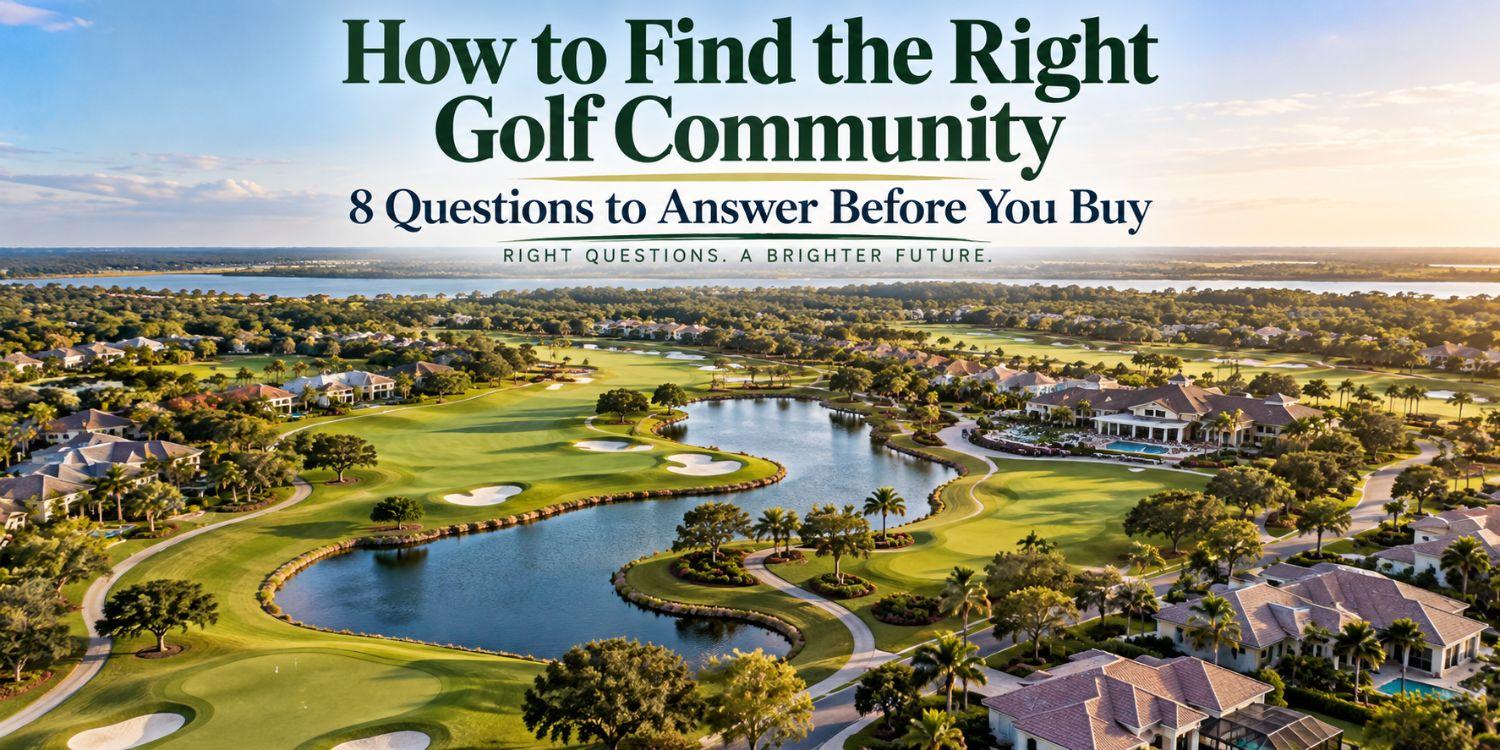

Most people pick a golf community the way they pick a driver. They fall for how it looks on the first swing and figure out the fine print later. A buyer stands on a back patio, looks at the 17th green glowing at sunset, and signs the contract. Two years later they know every detail of the dues schedule, the assessment for the new clubhouse, and why it takes 20 minutes to get a tee time in February.
Finding the right golf community isn't hard. It just means asking the right questions in the right order: how you want to live first, then the club, then the house. Here are the eight questions that matter most.
1. How Do You Actually Play?
Not how you play in your head. How you actually play.
If you tee it up four times a week, golf is the whole point, and the course and the club culture should drive the decision. If you play twice a month and spend more time at the pool, paying for a championship layout and a mandatory membership makes about as much sense as buying a sports car for the school pickup line.
Be honest about the course itself, too. A tournament-tested layout with forced carries and lightning greens is thrilling on a buddy trip. At 72, on your 140th round of the year, it can feel like a tax audit with a beverage cart. The course you buy next to is the course you'll play, so play it more than once. Look at the practice facility, the short game area, and whether there's a friendly nine or a par-3 course for the days your back has other plans. If you like to walk, make sure the routing lets you.
2. What Kind of Club Are You Actually Joining?
This is where buyers get tripped up most often. Golf communities come in a few basic structures:
- Bundled or mandatory membership: buying the home makes you a member. There's no separate initiation fee, but you pay dues whether you play or not.
- Equity membership: you buy a share of a member-owned club. Initiation fees at top clubs can run from six figures to well past half a million dollars.
- Non-equity membership: you pay for access, not ownership, usually with a lower initiation fee and no refund when you leave.
- Public, semi-private or daily fee golf within the community: no membership required, and tee times are open to the public.
Here's the part that surprises people. "Equity" doesn't always mean you'll get your money back. At some clubs, much of a six-figure initiation fee is non-refundable, and your ownership stake is little more than a vote. That doesn't make it a bad deal. It means you should read the membership documents before you fall in love with the kitchen. Also note that in Florida, equity memberships typically can't be rolled into your mortgage, so plan to pay that initiation in cash.
3. What Will It Really Cost Every Year?
The purchase price is the first number, not the last. Build a full annual budget that includes:
- HOA dues
- Club dues, and the expected annual increase. Club insiders suggest planning on 3 to 5 percent a year.
- Food and beverage minimums, which you owe whether you eat at the club or not
- Cart fees, locker fees, trail fees and range fees
- Capital assessments for things like irrigation systems, bunker renovations and clubhouse projects
- In Florida, CDD assessments on your property tax bill
- Transfer fees when you buy and when you sell
Then ask for the documents that tell you where those numbers are heading: the club's audited financial statements, the operating budget, the reserve study, the capital plan, and five years of assessment history. A club with a healthy reserve fund and a clear capital plan is a club that won't surprise you. A club that gets vague when you ask for financials has told you everything you need to know.
For the tax side of the budget, see our guide to the most tax friendly states for golf community living. A great club in the wrong tax state can cost more than a good club in the right one.
4. Who Owns the Golf Course?
This question matters more than any other. The course might belong to the developer, to the members, to the HOA, or to an outside operator. Each carries different risks.
- A developer-owned course is often beautifully maintained while homes are still for sale. The question is what happens when the last lot sells.
- A member-owned club puts the decisions, and the bills, in members' hands.
- A third-party operator may run a great course, but its owners answer to investors, not residents.
The good news is that golf is in its healthiest shape in two decades. According to the National Golf Foundation, course closures have fallen to their lowest level in roughly 20 years, openings are up, and more than 140 new courses were in planning or under construction at the start of 2026. Most of those are tied to private clubs, real estate communities and resorts, so buyers have more new options than they've had in a long time.
Closures still happen, though, especially on valuable land near growing cities. Ask what protects the golf course: deed restrictions, zoning, conservation easements, or ownership by the members themselves. A fairway view is only worth what's guaranteeing it stays a fairway.
5. Does the Location Work Beyond the Gates?
The best golf community in the world won't make up for a four-hour drive to the airport or a 45-minute trip to the nearest hospital. Look beyond the entrance sign:
- How far is the nearest major airport, and how many direct flights does it have?
- Where are the nearest hospital and the specialists you're likely to need?
- How close are the grocery store, the pharmacy and a decent steakhouse?
- How far are the grandkids? Some buyers want them close, and some want them exactly one flight away.
Think about the climate across all twelve months, not just the week you visited. The desert in July and the Carolina coast in hurricane season are both real. So is a Midwest winter if you're buying a primary home with a four-month golf season. That's fine if you're planning to spend winters elsewhere, and a real problem if you're not.
6. What Does Life Look Like Off the Course?
Even serious golfers spend most of their week off the course. And if one partner is a golfer and the other isn't, this question decides whether the move feels like a dream or a hostage situation.
Look at everything the community offers besides golf: pickleball and tennis, fitness and pools, walking trails, boating, dining, clubs, and the social calendar. Talk to residents who don't play. If they're happy, it's a real community. If they spend a lot of time talking about the golfers, that's a clue.
7. Can You Actually Get a Tee Time?
Nobody asks this question until it's too late. A community with 800 golf members and one course plays very differently in February than it does in the October brochure. Ask the starter and the head pro:
- How far in advance can members book tee times?
- How long do rounds take in peak season?
- How many rounds does the course host each year?
- Are tee times shared with resort guests or outside play?
8. Did You Stay Long Enough to Know?
You won't know until you go, and a two-hour tour with a sales rep doesn't count. Book a discovery visit or a stay-and-play, and treat it like a scouting trip:
- Play the course at least twice, at different times of day.
- Visit in the off-season as well as the peak season. Florida in August and the Southwest in July will tell you the truth.
- Eat in the grill room, not just the fine dining room.
- Talk to members in the locker room, where people are honest.
- Drive to the hospital, the airport and the grocery store at rush hour.
- Ask residents what they wish they had known before they bought.
Your Golf Community Checklist
Before you make an offer, get answers to these:
- Is club membership mandatory, and is it equity or non-equity?
- What is the total annual cost, including dues, minimums, HOA fees, CDD fees and insurance?
- What have dues increases and special assessments looked like over the past five years?
- Can I see the audited financials, reserve study and capital plan?
- Who owns the golf course, and what protects it from redevelopment?
- How easy is it to get a tee time in peak season?
- What happens to my membership and initiation fee when I sell?
- Does the location work for healthcare, travel and family?
Find a community that checks those boxes, and you'll get the patio, the sunset over 17, and no surprises. That's the whole point.